

Sloped Pergola
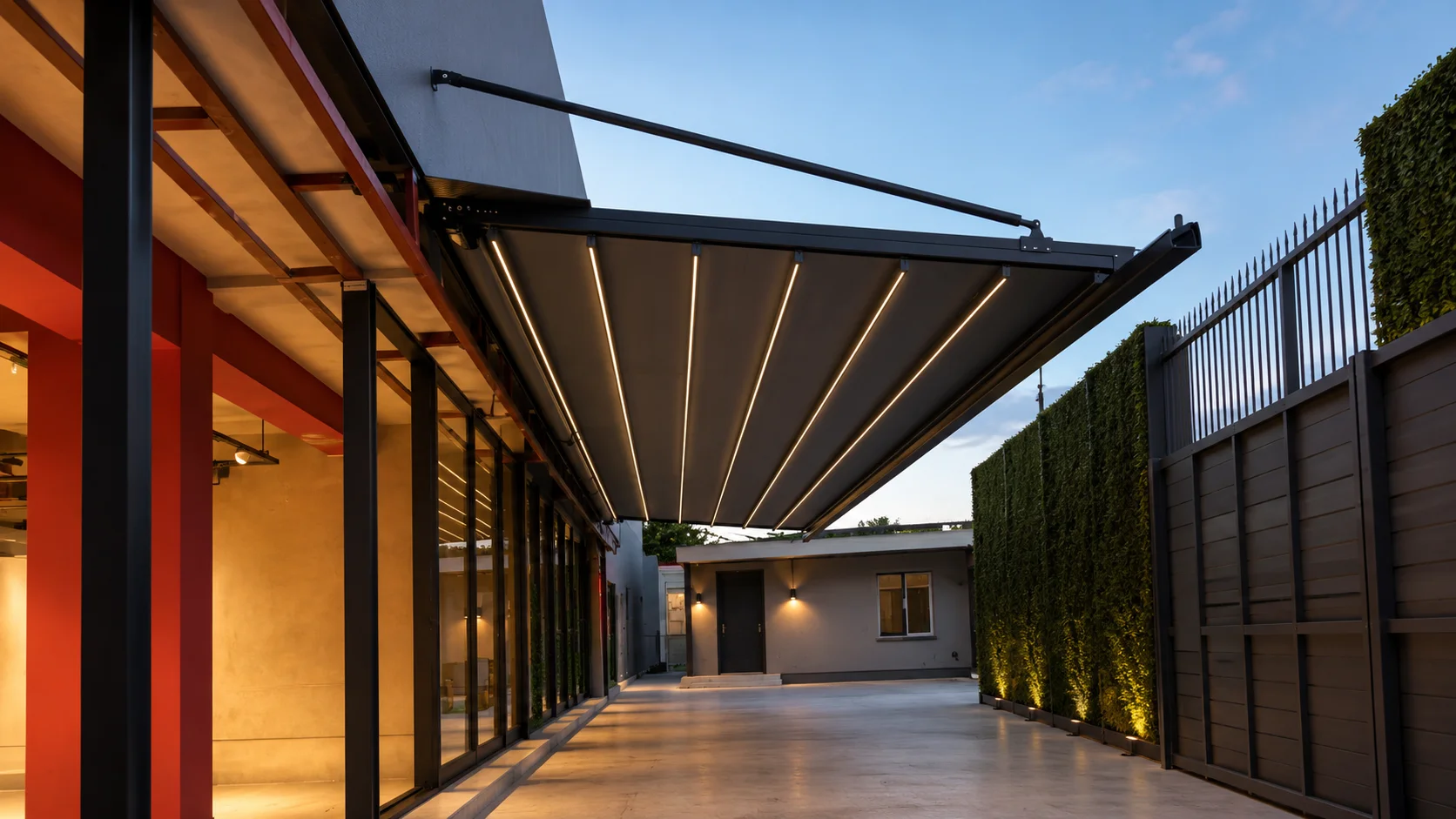
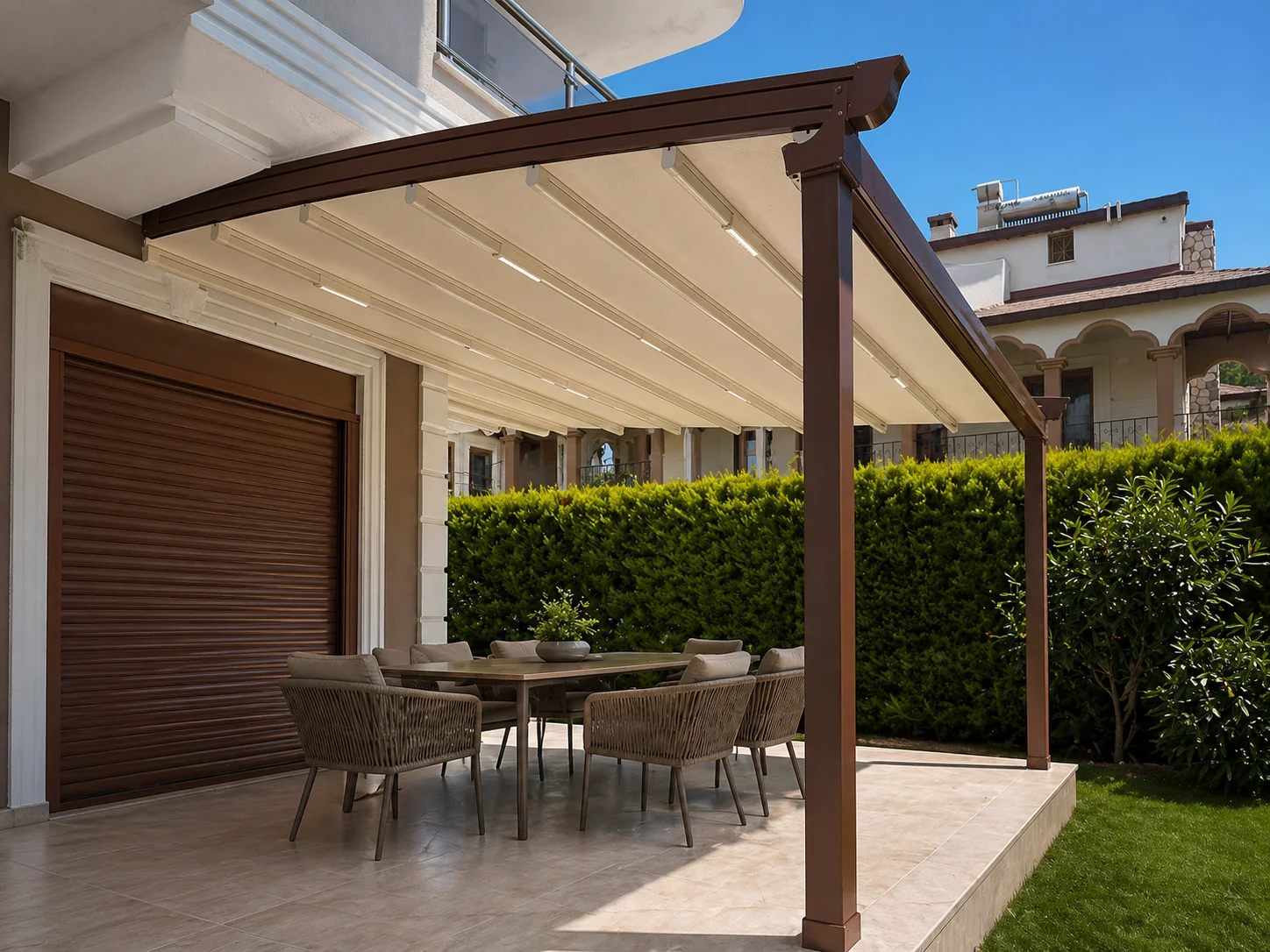
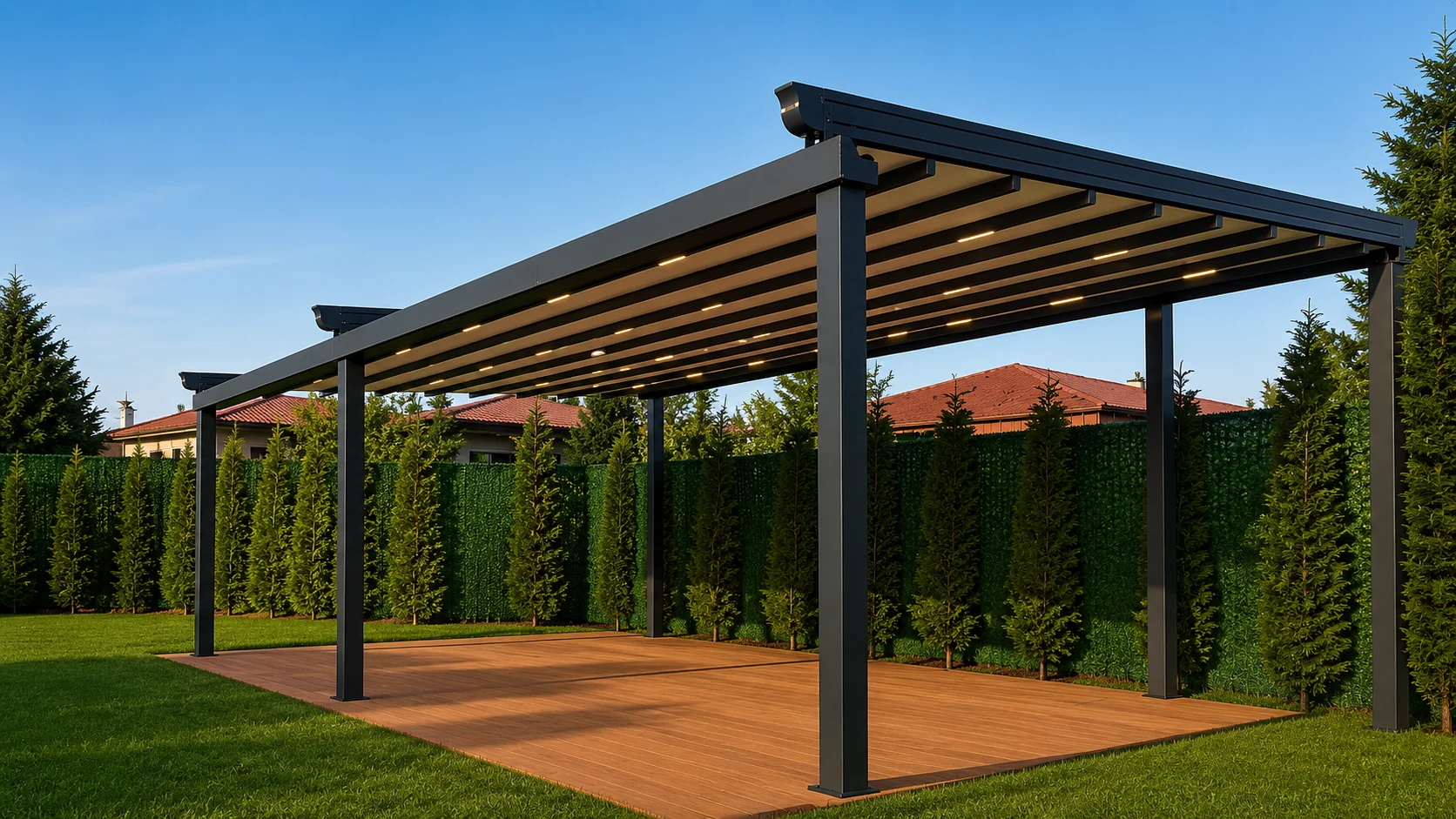
A sloped pergola is a functional fabric pergola model in which technical textile (PVC membrane) fabric is stretched across a plane inclined in one direction, quickly and effectively draining rainwater. The fabric's pronounced slope allows water to flow in a single direction without pooling and reach the gutter; this makes it especially ideal for facades with heavy rainfall and wide spans. With its retractable structure that adjusts shade levels, the sloped pergola focuses more on function and water management than on aesthetics. GlobalTente-produced sloped pergolas are a practical and durable solution for villa terraces, café and restaurant outdoor areas, poolside spaces, and projects in regions with frequent rain.
In a sloped pergola, the fabric is stretched over an aluminum carrier with a distinct one-way incline and opens and folds on rails. This slope allows rainwater to flow quickly toward the lower edge without accumulating on the fabric and to be drained through the gutter. A motor or manual mechanism moves the carriages carrying the fabric; when the fabric is opened, shade is created, and when it is retracted, the area opens up. The sloped form offers an advantage in water management compared with other fabric pergola types; especially in light to moderate rain, it ensures the area is protected and water is drained in a controlled way. In heavy rain, the fabric should be retracted.
Technical Specifications
FeatureValue Product typeSloped fabric pergola — pronounced one-way slope FabricPVC-coated polyester membrane; waterproof, 100% UV-protected MovementMotorized or manual; rail-mounted sliding carriage (accordion) Single module spanApprox. 4-6 m; modular joining FrameAluminum 6063, electrostatic powder coating (RAL) Water drainagePronounced one-way slope + low-edge gutter DriveTube motor + remote control; rain/wind sensor option LightingProfile-integrated LED option Warranty2 years on mechanism; manufacturer warranty on fabric Use, Automation, and Maintenance
- Fast water drainage: The pronounced slope directs water in one direction without pooling.
- Functional design: A practical and effective solution for rainy facades.
- Full opening: When the fabric is retracted, the sky opens up.
- Lightweight structure: Economical and light even over wide spans.
- UV and water protection: The technical membrane blocks sun and rain.
The performance of a sloped pergola is determined by membrane quality. GlobalTente applications use PVC-coated polyester technical textile; this fabric is fully waterproof, 100% UV-protected, and resistant to mildew and fading. To ensure the sloped form drains water correctly, the fabric's tensile strength and the slope's accurate calculation are critical. The support frame and sliding carriages are made from 6063 aluminum alloy and coated with electrostatic powder paint. A high-quality membrane stays taut for years and retains its slope; a weak fabric sags and disrupts water management.
A motorized sloped pergola can be operated with a remote control, wall switch, or mobile app. The rain sensor moves the fabric to the protection position, and the wind sensor automatically retracts the fabric in strong winds. Integrated LED lighting inside the profile adds atmosphere for evening use; zip screens added to the sides provide wind and insect protection, while glass provides full enclosure. With heater integration, the space under the pergola remains comfortable even on cool evenings. Thanks to its sloped form, the system can be safely used in light rain; in heavy rain, automatic retraction with sensors protects the fabric.
- Superior water management: The pronounced slope is the form that drains rain the fastest.
- Rain-friendly: Ideal for facades exposed to frequent rainfall.
- Economical: A functional and cost-effective shading solution.
- Flexible use: Open it when needed, retract it when needed.
- Quick installation: Most applications are completed in a short time.
- Villas and terraces in regions with frequent rainfall
- Outdoor areas of cafés, restaurants, and hotels
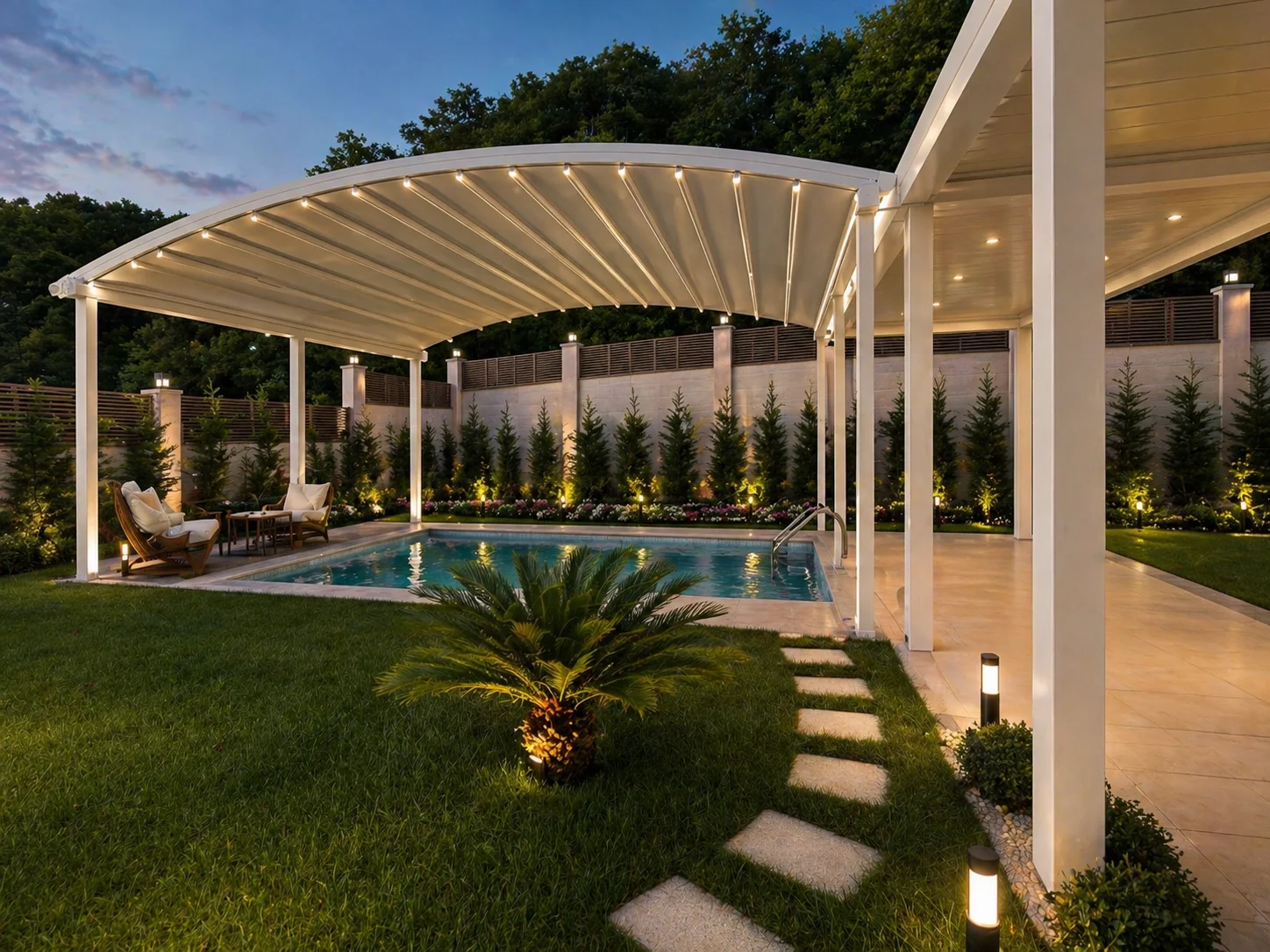
- Poolside shading
- Wide-span areas requiring rapid water drainage
The sloped pergola is ideal for facades and wide spans where water drainage is the priority and rainfall is frequent. If functional performance and durability matter more than an aesthetic curve, the sloped model is the right choice. If a soft, curved aesthetic is desired, half-radius or full-radius models are evaluated; if a flat and minimalist look is enough, the suspended model is considered. If full four-season protection, including rain, and a moving roof are required, bioclimatic systems stand out.
A sloped pergola can be produced with flat, striped, or patterned options in a wide color palette. Light tones feel airy and cool, while darker tones provide denser shade. The sloped form offers a dynamic and functional line in modern architecture; the one-way flowing line creates a simple and orderly look. The frame color is selected from the RAL catalog to match the building facade. In commercial use, branding or a logo can be applied to the fabric. The slope direction is determined during the site survey according to both water drainage and sun direction.
The sloped pergola is the most functional model in the fabric pergola family; with its pronounced one-way incline, it drains rainwater the fastest. While half-radius and full-radius models offer aesthetic curves, the suspended model has a flat and minimalist line. What sets the sloped model apart is its focus on water management and performance in rainy regions. On a facade with heavy rainfall, the sloped model is the most sensible choice; if aesthetics are the priority, radius models are more suitable. All are part of the pergola systems family and can be integrated with glass and zip screens.
Sloped pergola installation consists of survey, design, production, and installation stages. The most critical issue in a sloped form is setting the correct slope angle and properly designing the gutter on the low edge where the water will be directed; an incorrect slope weakens drainage. Solid anchoring of the columns, proper adjustment of fabric tension, and correct placement of the water discharge point are important on site. Experienced installation ensures that the slope provides both efficient water drainage and visual integrity.
Sloped pergola maintenance is easy: occasional cleaning of the membrane surface and removing leaves and dust from the gutter on the low edge are sufficient. PVC fabric does not retain stains and is easy to wipe clean. Cleaning the rail and sliding carriage system, and checking the motor once a year, is recommended. Because the sloped form drains water quickly, there is less dirt buildup on the fabric, which makes maintenance easier. Years later, when the fabric wears out, replacing only the membrane while preserving the frame is an economical solution.
Sloped pergola pricing varies depending on the span size, fabric quality and weight, manual or motorized drive, and sensor and lighting package. A sloped form is generally within the standard fabric pergola price range. Motorized and sensor-equipped systems are more expensive, but they provide comfort and fabric protection. Choosing a high-quality membrane saves money in the long run. Exact pricing is provided after a free site survey.
The sloped pergola stands out throughout all four seasons, especially with its water management advantage. In summer, the opened membrane blocks the sun and keeps the area cool underneath. In spring and autumn, during periods of increased rainfall, the sloped form protects the area and quickly drains light to moderate rain; this is where the sloped model performs at its best. In heavy rain, the fabric should be retracted. In winter, the fabric is usually retracted. The rain performance of the sloped form allows outdoor areas to be used for longer in regions with frequent rainfall.
For cafés, restaurants, and hotels, the sloped pergola is a practical solution that keeps outdoor areas functional even in rainy weather. In light rain, customers can sit sheltered under the sloped fabric while water is drained in a controlled manner; this extends the season and reduces table loss in rainy weather. The ability to shade wide spans without columns increases capacity. Branding or a logo applied to the fabric strengthens business visibility. Years later, replacing only the fabric refreshes the space at low cost.
Although the sloped pergola focuses more on function than aesthetics, it still offers a dynamic line in modern architecture. The one-way flowing inclined line creates a simple and purposeful look; it is compatible with minimalist structures. When the fabric color and frame tone are chosen to match the building facade, the sloped pergola offers both a functional and orderly appearance. In this model, where function is prioritized, aesthetics are achieved through simplicity and suitability for purpose; it is ideal for those who prefer reliable performance over showiness.
A sloped pergola comes standard with an aluminum support structure, a one-way sloped membrane roof, and a sliding carriage system. Options include: tube motor and remote control; rain and wind sensor; profile-integrated LED; zip screen or glass for side enclosure; heater; plain, striped, patterned, or branded fabric; and a custom RAL-colored frame. This modular structure allows the functional fabric pergola to be transformed into a fully equipped outdoor solution tailored to the need. The hardware and slope direction are determined together during the site survey.
Beyond water management, one of the main functions of a sloped pergola is sun control. The technical membrane blocks harmful UV rays, protecting both users' skin health and the fading of furniture, wood, and flooring. Light-colored fabric reflects solar heat and keeps the area cool underneath; by optimizing the slope direction according to the sun's angle, the most effective shade can be achieved. In this way, the sloped pergola manages not only rain but also summer sun effectively. The correct slope angle both drains water quickly and provides broad, even shade against the midday sun; as a result, the outdoor space remains comfortable throughout the day even on hot summer days.
Fabric selection in a sloped pergola directly determines the system's protection and durability. GlobalTente applications generally use PVC-coated polyester membrane; this fabric is fully waterproof, easy to clean, highly durable, and retains its tension for a long time in a sloped form. In the sloped model, where rainfall management is the priority, the fabric's waterproofness and tensile strength are especially important. Acrylic woven fabric can also be chosen depending on the need; however, PVC-coated fabric is more suitable for facades exposed to heavy rain. Fabric selection is evaluated together with weight, water repellency, UV protection factor, and color options; the right fabric determines both the water performance and lifespan of the sloped pergola.
Frequently Asked Questions
Why choose a sloped pergola?
Thanks to its pronounced one-way incline, it drains rainwater in the fastest and most effective way; it is ideal for rainy facades.
Can a sloped pergola be used in heavy rain?
It protects the area and drains water in light to moderate rain; in very heavy rain, the fabric should be retracted, and a bioclimatic system is more suitable for year-round use.
How is the slope direction determined?
It is determined during the site survey with both water drainage and sun direction in mind; the water is directed not toward pedestrian passage or a neighboring structure, but toward a suitable drainage point or the existing rainwater outlet.
What should be done in strong wind?
The fabric should be retracted; the wind sensor does this automatically.
Request a free site survey and expert assessment for a sloped pergola with custom sizing, fabric, color, and slope direction options.